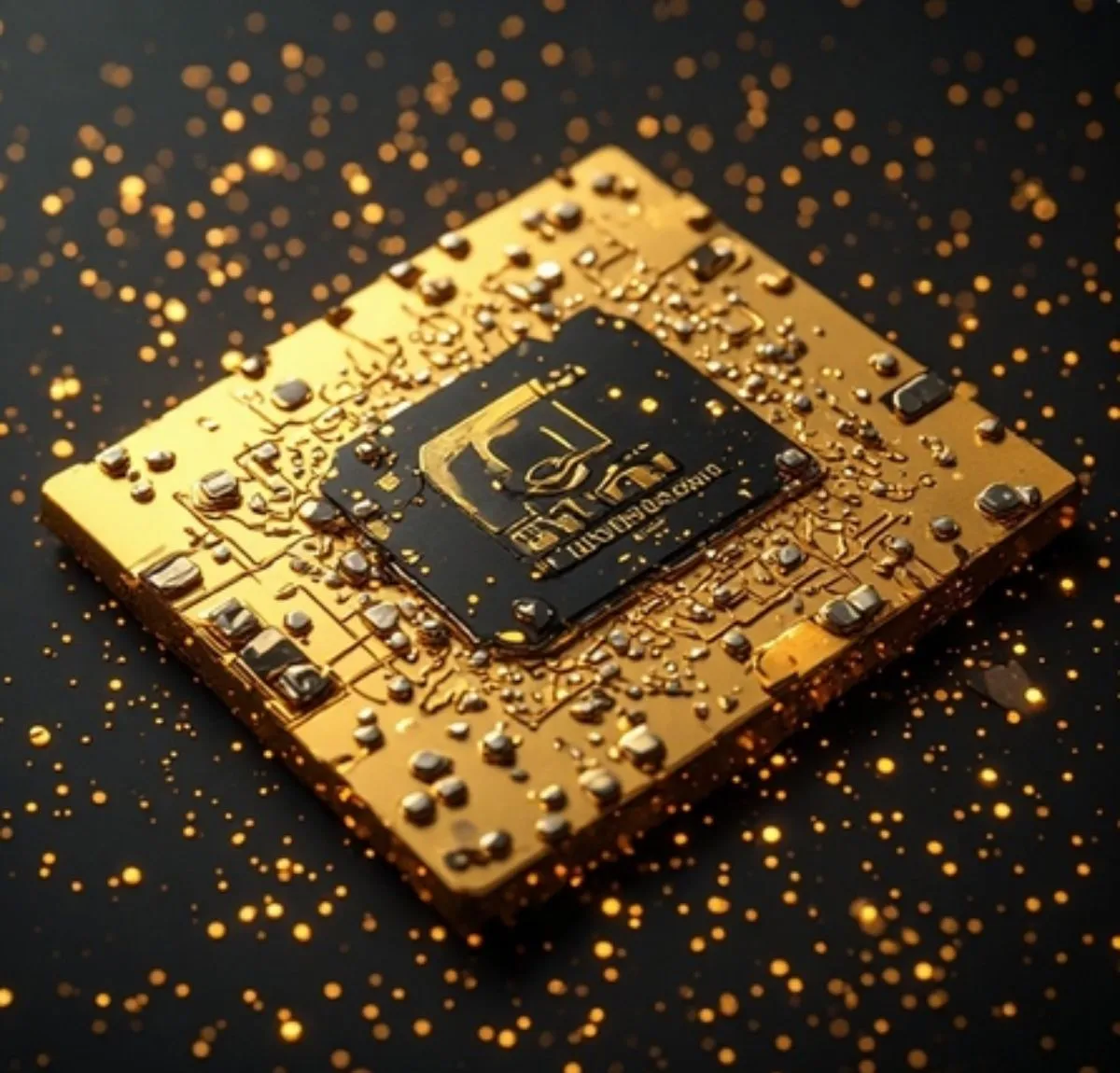
Microsoft dropped a significant announcement at its Build 2026 conference in San Francisco — a quantum chip called Majorana 2, and the story behind it is worth understanding clearly.
The Most Important Takeaway First
Microsoft now believes commercially useful quantum computers are just three years away — by 2029. That target was cut roughly in half from earlier projections. The reason for that confidence boost? A chip that performs 1,000 times more reliably than its predecessor, built with direct help from artificial intelligence.
What Actually Changed With This Chip
The Majorana 2 runs on topological qubits — a fundamentally different architecture than what Google and IBM use. Where competitors rely on superconducting aluminum wires, Microsoft switched to lead-based nanowires. The lead atom is larger, which creates more stable quantum behavior.
That materials switch wasn’t discovered by a human researcher sitting in a lab. An AI platform called Microsoft Discovery ran thousands of simulations, generated hypotheses, and identified lead as the superior material. This is arguably the most significant detail in the whole announcement — AI didn’t just assist the process, it drove the core scientific breakthrough.
The performance gains are concrete. Qubit coherence time jumped from milliseconds to roughly 20 seconds on average, with some qubits holding their quantum state for up to a full minute. Reliability improved a thousandfold.
Why the Qubit Type Matters
Most quantum computers today use superconducting qubits, which are extremely sensitive to environmental interference. They require heavy error correction just to function. Microsoft’s topological qubits are inherently more protected from that kind of noise, meaning they theoretically need far less error correction to produce reliable results.
This is Microsoft’s strategic bet — fewer but more stable qubits, rather than racing to stack up raw numbers.
The Honest Problem: Scale
Here’s where reality applies the brakes. Majorana 2 currently runs on just 12 qubits. A commercially useful quantum computer needs millions. Getting from 12 to millions is not an incremental challenge — it’s an engineering leap with no clear roadmap yet. Qubit scaling, error correction at massive scale, extreme cooling infrastructure, and an entirely new software ecosystem all need to be built out before 2029.
IBM already has over 1,000 qubits. Google runs at 70-plus. Microsoft is behind on raw numbers by a wide margin.
Where Microsoft Has an Edge
Despite the qubit gap, Microsoft holds two distinct advantages. First, topological qubits — if they scale — require significantly less error correction than competing approaches, which could prove decisive at large scales. Second, the AI-driven R&D pipeline through Microsoft Discovery could compress future development cycles from years to months, giving Microsoft a speed advantage in the race toward commercialization.
Combined with its existing Azure Quantum cloud infrastructure, Microsoft is positioning itself to own the quantum-plus-AI-plus-cloud combination if the 2029 goal lands.
What Experts Actually Think
The 1,000-fold reliability improvement is widely accepted as genuine. However, the 2029 commercial timeline draws skepticism from many researchers. Quantum computing has repeatedly missed its own deadlines, and the scaling challenge ahead is historically unprecedented. There’s also ongoing scientific debate around Majorana fermions themselves — the physical phenomenon underlying the entire approach — which adds an additional layer of technical risk.
The Bigger Picture
Perhaps more important than the chip itself is what it represents for science broadly. Microsoft Discovery demonstrates that AI can now unlock hard physics breakthroughs — not just write code or generate text. The same approach could accelerate progress in battery technology, drug development, and materials science across many fields.
Bottom Line for 2026–2029
Watch two things closely: whether Microsoft can scale beyond 12 qubits meaningfully by 2027, and whether independent scientists validate the underlying Majorana fermion science. Those two milestones will determine whether 2029 is a realistic target or an ambitious headline.