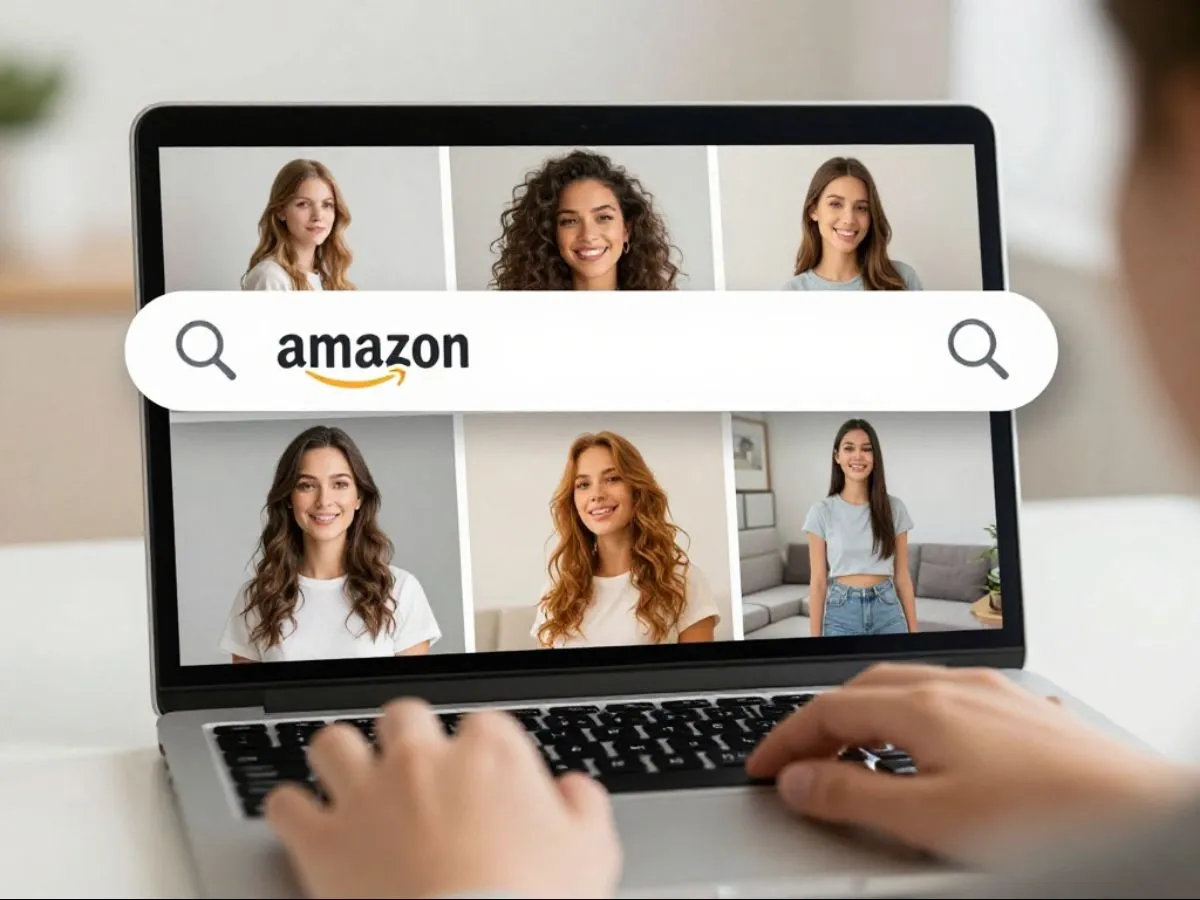
Amazon recently rolled out a feature that puts AI-generated product images directly inside its shopping app’s search bar. As you type, synthetic images appear below autocomplete suggestions — updating in real time with every word. The catch? These products don’t actually exist.
Understanding this feature matters because it quietly changes how millions of people shop, and most users won’t realize what they’re seeing.
What the Feature Actually Does
When you open the Amazon Shopping app and start typing — say, “blue summer dress” — a carousel of AI-generated dress images appears beneath your search suggestions. These images shift and refine as you add each word, showing style variations in color, sleeve length, fabric, and fit.
The images look identical to real product photos: professional lighting, clean backgrounds, high resolution. Nothing labels them as synthetic. When you tap one, Amazon redirects you to actual products with a similar style — but the exact item you saw was never for sale.
This is live in the U.S. right now, on iOS and Android, covering apparel and home goods. More categories are expected soon.
Amazon’s Reasoning
Amazon frames this as a solution to a vocabulary problem. Shoppers often know what they want visually but don’t know the retail terminology to find it. You might want a “durable natural fiber rug” without knowing the word “sisal.” You might want a specific dress silhouette without knowing it’s called a “cowl neck.”
The AI bridges that gap by turning vague descriptions into visual examples. According to Amazon, this shortens the distance between “I want this” and “I found it,” making the shopping journey faster and more intuitive.
Why Critics Are Pushing Back
The criticism is pointed and largely valid. The core problem is that shopping platforms have always operated on one foundational rule: a product image represents something you can buy. This feature breaks that rule without warning users.
Several concerns are worth noting in order of importance:
No transparency. There’s no label identifying these as AI-generated images. Most shoppers will assume they’re seeing real inventory, then feel misled when the exact item doesn’t exist.
No way to opt out. Amazon hasn’t announced any option to disable the feature. You’re exposed to synthetic content whether you want it or not.
Idealized imagery creates false expectations. AI tends to generate flawless, perfectly styled products. Real inventory rarely matches that standard, which leads to disappointment when shoppers find similar-but-not-identical products.
The “why” is unclear. Amazon already has millions of real product photos. Critics argue there’s no genuine need to fabricate images when authentic ones already exist in abundance.
The Bigger Picture
This isn’t an isolated experiment. Amazon has launched over 14 AI-powered shopping features recently, including AI review summaries, audio product Q&As, outfit collages, and visual camera search. What makes this particular feature different — and more controversial — is that it’s the first to introduce completely synthetic content into the primary search experience.
Every other AI feature Amazon has rolled out works with real products. This one invents them.
What Shoppers Should Do
A few practical takeaways to manage your experience effectively:
- Treat AI images as style mood boards, not product listings. They’re inspiration, not inventory.
- Tap through before getting attached. The real products linked rarely match the AI image exactly.
- Check actual product photos carefully before purchasing, since the AI version may have set unrealistic expectations.
- Know you can’t turn it off — but you can simply scroll past the carousel and use the search results directly.
The feature is designed to make purchasing feel effortless. That’s not necessarily in your interest as a shopper. Staying aware of what you’re actually looking at — synthetic suggestions, not real products — is the most important thing you can do until Amazon adds proper labeling or an opt-out option.