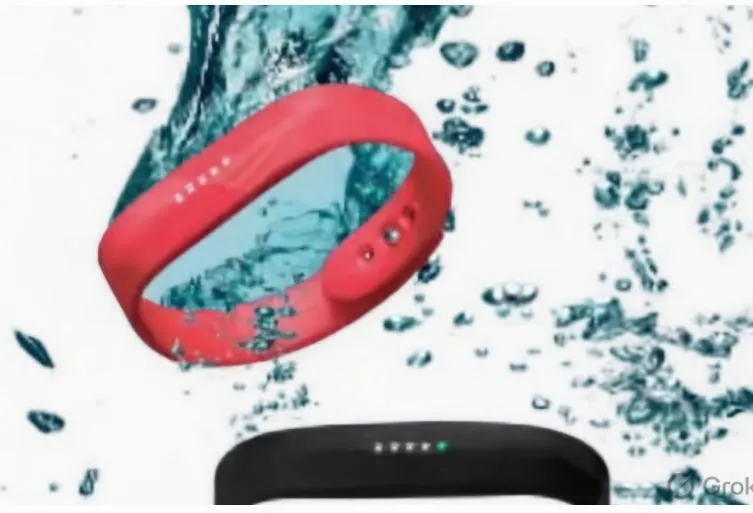
Google has taken a bold step with the Fitbit Air — a fitness band that removes the screen entirely and bets everything on AI. At Rs.8,299 (roughly $99.99), it targets people who want meaningful health data without the distractions of a smartwatch. But does the trade-off make sense? Here is what you need to know, starting with what matters most.
The AI Coach Is the Real Product
Everything about the Fitbit Air points back to one thing: the Google Health Coach, driven by Gemini AI. This is not just a step counter with a chatbot bolted on. The coach reads your heart rate variability, sleep quality, activity load, and resting heart rate every single day, then calculates a “Readiness Score” between 0 and 100. Based on that number, it gives you a specific recommendation — something like swapping a high-intensity run for a yoga session because your recovery data looks weak.
You can talk to the coach through voice or text inside the Google Health app. It also connects to your Google Calendar, so it knows when you have a packed day ahead and adjusts its suggestions accordingly. The first three months of this experience come free. After that, the subscription costs $9.99 per month (roughly Rs.830), unlocking extras like illness risk forecasting, live video coaching sessions, and a nutrition scanner that reads food from photos.
If you are not interested in using the AI coach regularly, the Fitbit Air loses a significant part of its appeal.
Tracking Performance That Punches Above Its Price
For a Rs.8,299 device, the sensor lineup is surprisingly complete. You get continuous optical heart rate monitoring, a three-axis accelerometer paired with a gyroscope, EDA sensors for stress detection, blood oxygen tracking overnight, and skin temperature variation. The band auto-detects over 40 activity types — from cycling and swimming to yoga and strength training.
Google claims 98% accuracy in step counting and 95% accuracy in identifying sleep stages, both measured against lab references. There is no built-in GPS, but the band connects to your phone’s GPS for outdoor route tracking, accurate within around 10 meters.
The 18g weight makes it genuinely forgettable on the wrist, which is the whole point. If you stop wearing it, the data disappears. The IP68 rating (50-meter water resistance) means you can swim laps without worrying.
Battery Life Is Solid, Design Is Simple
Seven days of battery on a single charge covers a full week for most users, dropping to around five days if you heavily use overnight SpO2 tracking. A 15-minute charge via USB-C gives you roughly two additional days — a practical feature for busy schedules.
The band weighs just 18 grams, uses a magnetic clasp for easy on/off, and comes in three adjustable sizes. There is a single physical button for starting or pausing workouts. Haptic feedback handles all other alerts. The lack of a screen is a deliberate choice — it reduces distractions and preserves battery — but it does mean everything you want to see lives inside the Google Health app.
Pricing Options and India Availability
Three bundles are available at launch. The Solo version at Rs.8,299 includes one strap and three months of Health Premium. The Duo bundle at Rs.10,799 adds a second strap in a different colour. The Full Kit at Rs.12,499 gives you three straps plus six months of Premium included.
Physical retail in India begins May 26 through Flipkart and Reliance Digital. Online orders are already live via Google Store and Amazon.
Who Should Buy It and Who Should Skip It
The Fitbit Air is a strong buy if you want long-term health insights, value a lightweight always-on tracker, and are comfortable using an app for all your data. It competes well against the Whoop 5.0 and Oura Ring 4 on price while matching them on core health tracking.
Skip it if you want a screen for quick glances, need built-in GPS, or have no interest in a subscription model after the trial ends.
For Hyderabad users entering Google’s health ecosystem for the first time, this is a compelling and affordable starting point.