Imagine you walk into a store in May 2026, and Vivo has just dropped two shiny new flagships side by side. One looks like a serious camera beast, the other feels almost too slim to be packing the specs it carries. That’s the story of the X300 Ultra and the X300 FE — and honestly, picking between them says a lot about what kind of phone user you really are.
Let’s start with the big guy.
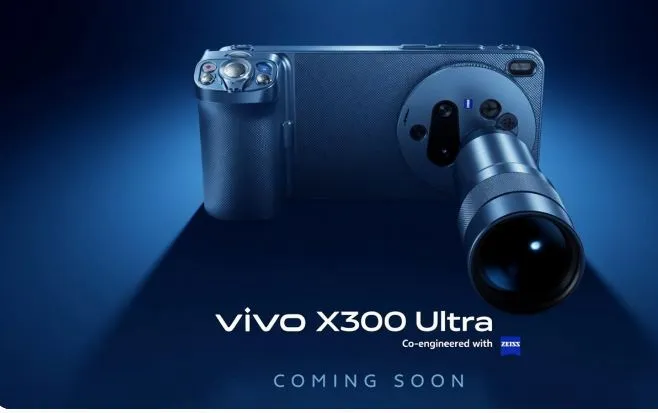
The X300 Ultra is Vivo going all-in. Think of it as the phone for someone who genuinely gets annoyed when their camera phone can’t nail a shot of a bird sitting 50 metres away. Sounds niche, right? But that’s kind of the point. Vivo stuffed a Snapdragon 8 Elite Gen 5 chip inside — the kind that makes benchmark apps sweat with over 3.2 million AnTuTu points — paired with up to 24GB RAM and 1TB of storage. The 6.82-inch QHD+ screen hits a blinding 5,000 nits of brightness, which means yes, you can actually see it in harsh Indian summer sunlight.
The real party trick, though, is the camera system. There are two 200-megapixel sensors on the back — one main, one periscope telephoto — both tuned by ZEISS. The telephoto alone gives you 10x optical zoom, and with an optional external 85mm tele-extender that magnetically clips on, you’re looking at a setup that can genuinely rival dedicated cameras for wildlife and sports photography. You also get 8K video, 4K at 120fps in Dolby Vision, and a stabilization system that uses a gimbal mechanism — so shaky hands are no longer your problem. The phone even carries an IP69 rating, which is the highest water resistance standard you’ll find on a consumer smartphone today. All of this sits on a 6,600mAh silicon-carbon battery that charges from zero to full in about 23 minutes with the included 100W charger.
Starting price? Around Rs.79,999, going up to Rs.99,999 for the top-tier variant.
Now here’s where the X300 FE flips the script entirely.
The FE is for someone who wants flagship power but finds the Ultra’s 229g frame a bit too much to carry around daily. At just 191g and 7.8mm thin, it genuinely disappears into your pocket. Vivo used the Snapdragon 8s Gen 5 here — still a seriously powerful chip, scoring around 2.9 million AnTuTu — but in a more efficient package designed for all-day use without a thermal meltdown.
The screen is a 6.31-inch FHD+ panel running at 120Hz, which is smooth enough for scrolling, gaming, and watching content without feeling like you’re settling. The 5,800mAh battery with 90W charging fills up in about 30 minutes, so even if you forget to charge overnight, a quick plug-in before heading out sorts you.
The camera story here is different but still impressive. You get three 50-megapixel ZEISS-certified sensors — main, telephoto, and ultra-wide — plus a 50-megapixel front camera. No 200MP madness, but the AI Tele Bird Mode and 4K Cinematic Portrait features mean your travel and portrait shots will still turn heads. It’s a “do everything well” camera rather than a “do one thing spectacularly” one.
Priced from around Rs.59,999, it’s the more practical choice for most people.
Both phones launch on May 7, 2026, through Flipkart and Vivo’s own stores, with early access for Vivo members from May 5. Launch offers include up to Rs.12,000 exchange bonus and no-cost EMI options, which softens the blow a bit.
So here’s the honest summary: if you’re a content creator, photography enthusiast, or just someone who wants the absolute best a smartphone camera can offer right now, the Ultra is worth every rupee. But if you want a phone that handles everything comfortably without weighing down your shirt pocket — or your wallet — the FE is quietly one of the most well-rounded flagships of 2026. Both run OriginOS 6 on Android 16 with four years of OS updates, so whichever you pick, you’re covered for the long haul.