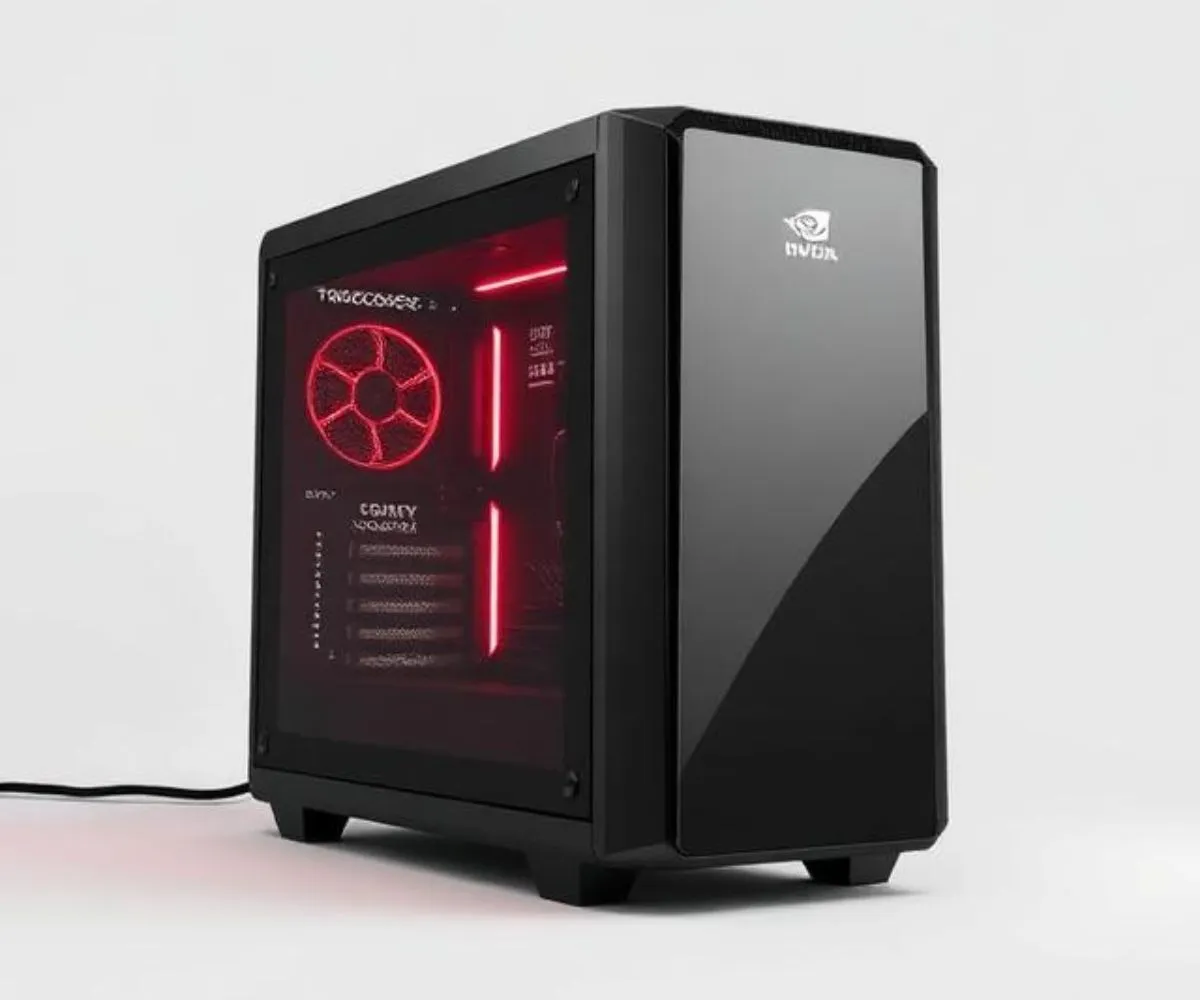
The PC industry is undergoing a major shift, and Nvidia is at the center of it. For the first time in history, the GPU giant is entering the Windows PC market not as a graphics card maker, but as the main processor powering entire computers.
1. This Is a Historic First
Nvidia has never built a CPU for Windows PCs before. Their new chips, called N1 and N1X, are designed to serve as the brain of a laptop, handling everything the processor normally does. This puts Nvidia in direct competition with Intel and AMD, who together control over 90% of the PC processor market. That alone makes this launch one of the most significant in PC history.
2. The Chip Specs Are Genuinely Impressive
The high-end N1X combines a 20-core ARM-based processor with a Blackwell GPU featuring 6,144 CUDA cores — the same count found in desktop RTX 5070 graphics cards. It also includes an AI chip delivering 100 TOPS (Trillion Operations Per Second), nearly double what Qualcomm’s competing chip offers. Memory goes up to 128GB, and the whole package is built on TSMC’s efficient 4nm process. On paper, this outperforms every rival laptop chip in AI workload handling and graphics power.
3. Microsoft and Dell Are Already On Board
This is not a concept product. Microsoft’s Surface lineup and Dell laptops have already confirmed support, meaning real devices will reach store shelves. The announcement happened simultaneously at Computex 2026 in Taipei and Microsoft Build 2026 in San Francisco, signaling deep collaboration between both companies rather than a solo hardware play.
4. AI Is the Core Purpose
The entire chip design philosophy borrows from Nvidia’s data center products. The goal is bringing powerful, local AI processing directly to your laptop without depending on cloud servers. Windows AI agents, Copilot features, and on-device machine learning will all run faster and more privately. Microsoft’s Windows chief hinted at new developer capabilities arriving alongside this launch, though not a new Windows version.
5. Gaming Has Real Limitations
Despite the powerful integrated GPU, most Windows games are built for x86 processors used by Intel and AMD. Running them on ARM architecture requires software translation, which introduces a performance penalty estimated between 10 and 20 percent. Hardcore gamers should wait for native game support to grow before treating this as a gaming machine.
6. The Competition Is Strong
Apple’s M4 chip still leads in single-core CPU speed and uses a more advanced 3nm manufacturing process. Qualcomm already has ARM-based Windows laptops on the market, with cheaper options starting around $300. Nvidia is targeting the premium segment with expected pricing between $1,500 and $3,000, so buyers are paying for the AI and GPU advantages specifically.
7. The Market Opportunity Is Enormous
Nvidia is eyeing $20 billion in CPU revenue from a $200 billion total PC market. The broader AI PC segment is projected to grow from $35.6 billion in 2026 to over $167 billion by 2034. If Nvidia captures even a modest share, this becomes a transformational revenue stream sitting alongside their already dominant GPU business.
8. Delays Are Behind Them — For Now
Development started in late 2023, with an original Q1 2026 launch that slipped due to chip redesigns and Windows software alignment. As of June 2026, devices are officially announced with availability expected in Q3 2026. The delay history is worth noting for buyers who prefer waiting until second-generation products iron out early issues.
Bottom Line
Nvidia entering the CPU market is not just a product launch — it reshapes who controls the PC industry. For users who prioritize AI performance and local processing power over gaming or budget, this represents a genuinely compelling new option. Everyone else should watch closely as the ecosystem matures.