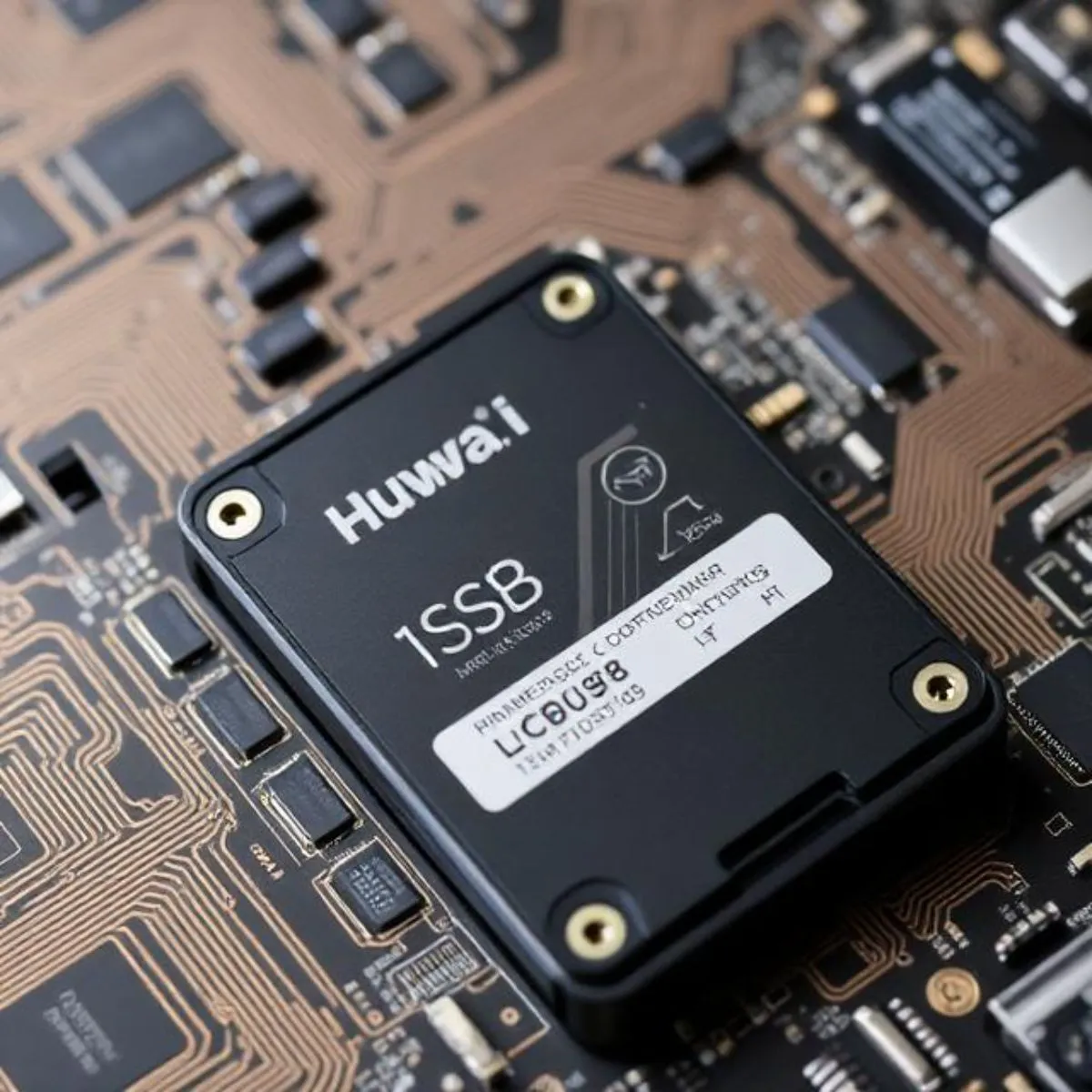
A single 2U server chassis from Huawei can now hold 36 drives, each storing 122.88 terabytes of data. That adds up to roughly 4.42 petabytes of raw storage in a box about the size of a standard kitchen microwave. With built-in compression, that figure rises to around 11 petabytes of usable capacity — beating comparable Western systems that top out near 10 petabytes. For AI companies managing enormous datasets, that density gap matters enormously.
- Three Drives for Three Different Jobs
Huawei did not build a single all-purpose drive. Instead, it released three distinct models for three distinct tasks.
The EX560 is built for AI training. It handles up to 1.5 million write operations per second, responds in under seven microseconds, and can sustain heavy use all day for years. Teams running model training or fine-tuning should pay close attention here — Huawei claims it can support up to six times more trainable parameters per server compared to older storage approaches.
The SP560 targets inference and mixed workloads. It runs at roughly 600,000 write operations per second with similar low latency but lower endurance, making it a cost-effective choice for services answering queries around the clock. Huawei reports up to 75% faster first-token response times in supported setups.
The LC560 is all about raw capacity. Individual drives reach up to 245 terabytes, suitable for storing massive collections of images, video, text, and vector data. Read speed hits 14.7 gigabytes per second. This model fits organizations building AI pipelines around large-scale retrieval and multimodal content.
- How Huawei Packed So Much Into Each Drive
The secret is a technique called Die-on-Board packaging. Instead of placing memory chips inside standard housings and then attaching those housings to a circuit board, Huawei bonds the chips directly to the board itself. This removes a layer of packaging, boosts storage density by about 33%, and reduces cost per terabyte. The LC560 takes this further with a 36-layer chip stack, surpassing what was previously considered the practical ceiling of 16 layers.
- Working Around Export Restrictions
Because Huawei is on the US Entity List, it cannot purchase the most advanced flash memory from Western suppliers. Rather than waiting for access, Huawei engineered its way around the limitation. By stacking more chips and packaging them more tightly, the company achieves competitive capacity without needing the latest memory technology. This is a significant engineering workaround with real implications for how global chip restrictions shape product development.
- Storage That Also Computes
Each drive contains a dedicated AI processing unit built directly into the controller chip. This means the drive itself can filter, compress, and analyze data before sending it to a GPU — eliminating unnecessary data movement. Huawei says this cuts energy consumption from data transfers by up to 80%. For applications like large language model inference, where the system constantly reads cached context, this on-drive processing dramatically reduces bottlenecks.
- Part of a Bigger System
These drives do not operate in isolation. They slot into Huawei’s OceanStor Pacific 9926 storage nodes, which connect to software layers managing memory caching, model orchestration, and data placement across SSDs, standard RAM, and high-bandwidth memory. Together, Huawei claims the full stack can cut the time between receiving a query and returning the first word of a response by up to 90%.
Bottom Line
Huawei has combined high-density packaging, on-device AI processing, and tightly integrated software to build storage infrastructure that directly competes with leading Western systems — without relying on Western components. For anyone planning AI infrastructure, evaluating AI cloud vendors, or tracking the global semiconductor landscape, these products are worth understanding in detail.
Huawei’s OceanDisk AI SSDs are genuinely competitive — 11PB per 2U node, on-drive AI compute, and 80% energy savings are real advantages, not marketing fluff. The Die-on-Board packaging workaround is clever and effective given the export restrictions.
The catch: these drives exist because Huawei had to innovate around sanctions, not purely by choice. Availability outside China-centric markets remains limited, and independent benchmarks are scarce.
Worth watching for anyone in AI infrastructure. Worth buying only if you’re operating within Huawei’s ecosystem.