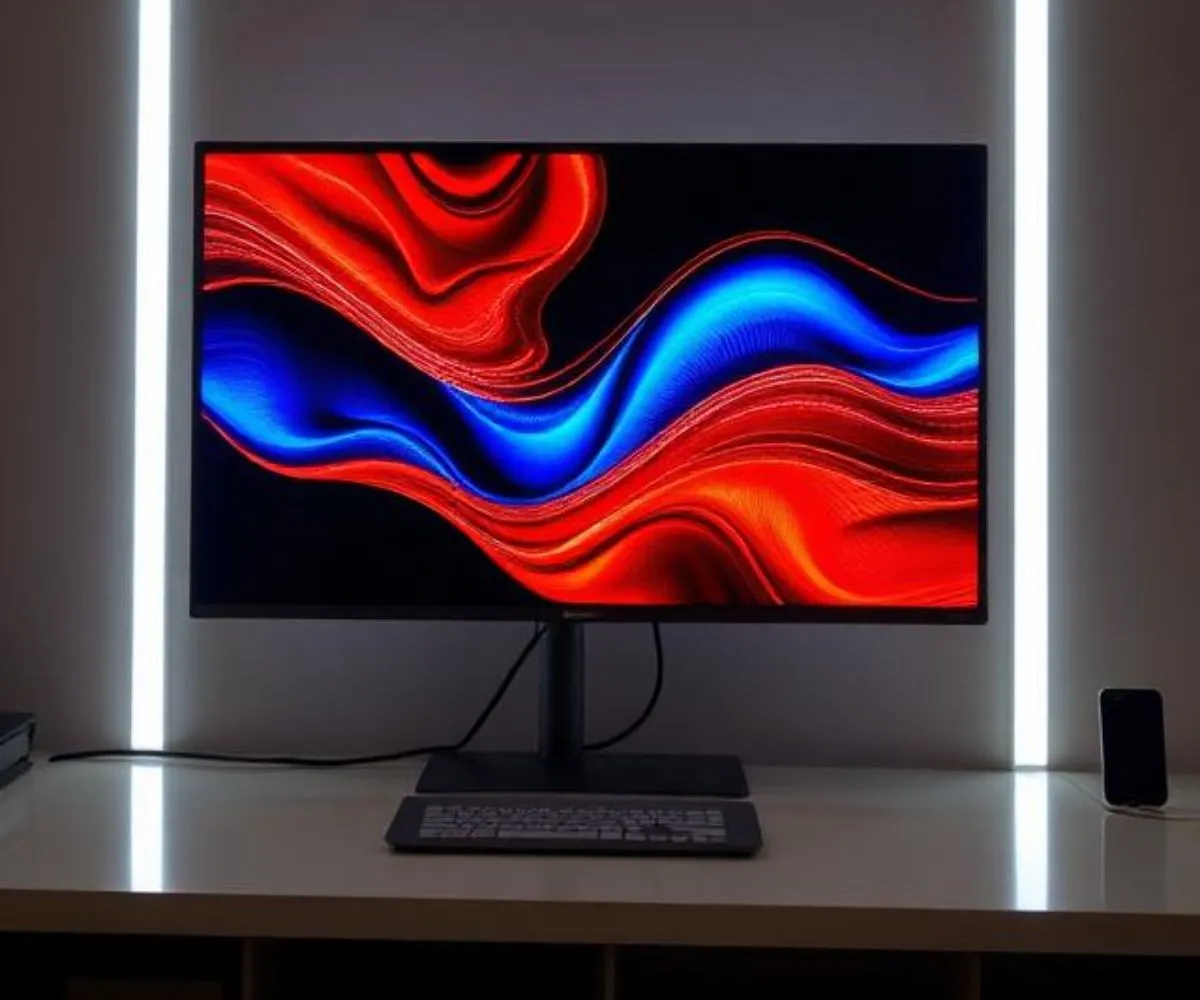
For years, competitive gamers had to choose. You either bought a fast TN or IPS panel at 540Hz and lived with washed-out colors and poor contrast, or you went OLED for stunning visuals but settled for 240Hz. The Asus ROG Strix OLED XG259QWPG Ace ends that trade-off. Announced ahead of Computex 2026, it combines a 24.5-inch OLED panel with a 540Hz refresh rate — a combination no monitor has shipped with before.
That alone is the headline. Everything else is supporting detail.
Why 540Hz on OLED Actually Matters
Previous 540Hz monitors, including Asus’s own ROG Swift Pro PG248QP from 2023, used E-TN panels. Those panels are fast but deliver noticeably inferior colors and contrast. OLED changes the equation completely. Pixel response on OLED sits around 0.03ms, which is faster than anything TN or IPS can offer. Add infinite contrast ratio, zero backlight bleed, and accurate color reproduction, and you have a monitor that is both faster and better-looking than what came before.
For FPS games like Valorant, CS2, and Apex Legends, this matters. Motion blur disappears. Fast-moving enemies are sharper. And you no longer have to stare at flat, low-contrast visuals to get the performance you need.
Size: Why 24.5 Inches Is the Right Choice
Asus could have gone bigger. OLED gaming monitors at 27 inches already exist. Instead, the company stuck with the 24.5-inch format that professional esports tournaments have used for years. The reason is practical — smaller screens require less eye movement, which helps with target tracking in fast games. At 1080p, the pixel density at this size also hits a sweet spot for competitive clarity without making individual pixels visible.
If your priority is image quality over gaming performance, a larger OLED might suit you better. But if you play competitively, 24.5 inches is the correct size.
What Asus Has Not Told Us Yet
The full specification sheet was not released with the announcement. Resolution, peak brightness, HDR tier, color gamut, and connectivity options are all still unconfirmed. Based on Asus’s recent OLED lineup, a 1080p panel, around 1,000 nits peak brightness, DisplayHDR True Black support, and both DisplayPort and HDMI inputs are reasonable expectations. The confirmed details at Computex 2026 in June will fill in these gaps.
One concern worth naming upfront: burn-in. OLED panels can develop permanent image retention over time with static content, like HUD elements in games. Asus has previously addressed this with BlackShield film on its OLED monitors, and that feature is expected here too. How effective it proves in practice, especially for players who log long daily hours, remains to be seen.
Price: Expect a Premium
No official price has been announced. Based on current OLED gaming monitor pricing and the added cost of pushing 540Hz on that panel type, expect something in the $800 to $1,200 range. That is not a casual purchase. But for a serious competitive player who has been waiting for OLED performance without the refresh rate compromise, the price may be justified.
Who Should Buy This
This monitor is built for competitive gamers who care about both performance and image quality. If you play at a high level and have been frustrated by the visual limitations of fast TN panels, this is the upgrade you have been waiting for. If you mostly play single-player games where 240Hz is already smooth enough, the premium over existing OLED options is harder to justify.
Bottom Line
The ROG Strix OLED XG259QWPG Ace solves a real problem that competitive gamers have faced for a long time. It brings OLED’s visual advantages — perfect blacks, instant pixel response, accurate colors — to the 24.5-inch esports format without cutting the refresh rate. Once full specifications are confirmed at Computex 2026, this will likely be the monitor to beat in its category.