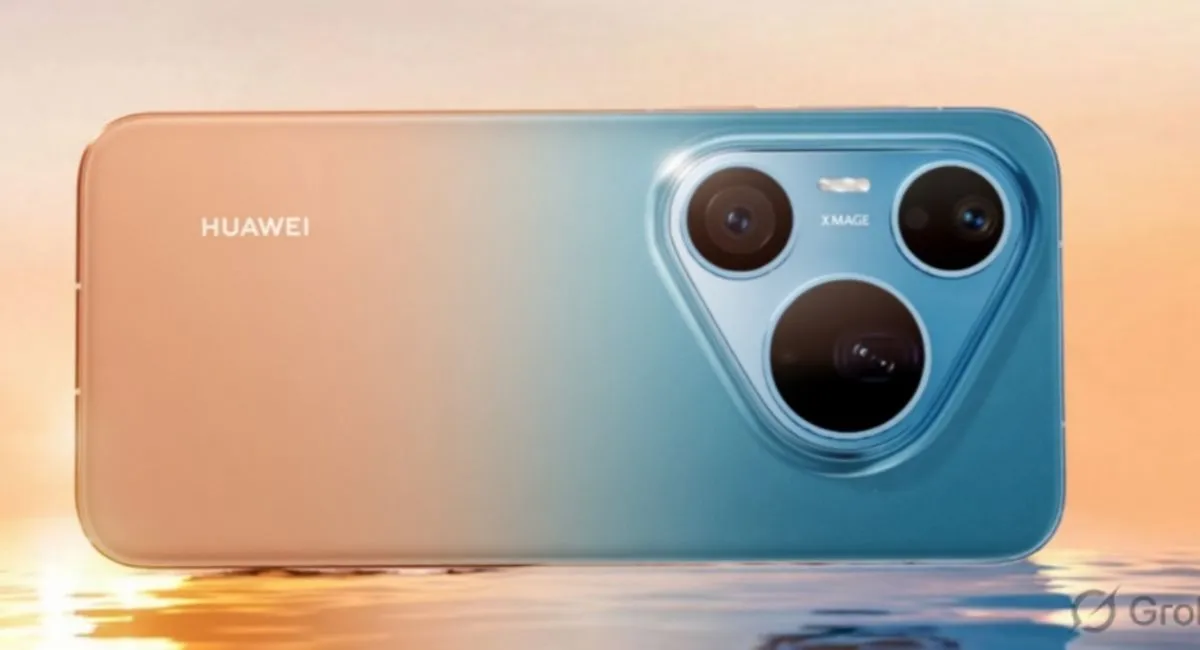
- The Core Idea: All Three Lenses Work at Once
Most phone cameras pick one lens per shot. Wide? Use the wide sensor. Zoomed in? Switch to telephoto. The Pura 100 reportedly scraps that approach entirely.
Instead, it activates all three lenses — main, ultra-wide, and telephoto — at the same time. The data from each sensor feeds into Huawei’s image processor simultaneously, and advanced algorithms fuse everything into a single output image. Huawei calls this Multi-Camera Fusion.
The practical result is a photo that carries the resolution of the telephoto, the color richness of the main sensor, and the dynamic range of the ultra-wide — all in one frame. No trade-offs, no picking the “best” lens for the moment.
- The Zoom Problem It Solves
Anyone who shoots video or zooms through focal lengths on a smartphone knows the frustration: that sudden jump when the camera switches lenses. Colors shift. Sharpness dips. Exposure changes in a visible, jarring way.
Multi-Camera Fusion fixes this by continuously blending data from all sensors throughout the entire zoom range. There’s no discrete switching point because all three are always running. From 0.6x ultra-wide to 10x telephoto and beyond, the output stays consistent — same sharpness, same color balance, same exposure behavior.
This alone would be a significant upgrade over any current flagship.
- Multi-Spectral Sensors on Every Lens
All three lenses on the Pura 100 will reportedly include multi-spectral sensors — hardware that captures light beyond the standard red, green, and blue channels most cameras use.
Why does this matter? Standard RGB sensors guess at color accuracy using software databases. Multi-spectral sensors capture actual environmental light data across a wider range of wavelengths, which means the camera can calculate color from physics rather than approximation. The result is better fabric texture rendering, cleaner sky gradients and more accurate skin tones — especially in mixed or artificial lighting where current phones still struggle.
Huawei’s Pura 90 already uses multi-spectral sensors, but the Pura 100 reportedly integrates them deeper into the fusion pipeline, making them work in combination with the multi-camera data rather than in isolation.
- Custom Hardware to Match the Software
Software alone can’t carry this kind of system. The Pura 100 is expected to pair Multi-Camera Fusion with Huawei’s own custom-designed CMOS image sensors and proprietary lens assemblies built specifically to support their imaging pipeline. The ISP and NPU also need ultra-low latency data pathways to handle three simultaneous streams without delay.
This level of hardware-software integration is what separates a genuine innovation from a marketing feature. Similar multi-camera fusion concepts have appeared in Honor devices before, but Huawei’s implementation is described as considerably more advanced.
- Still in Lab Testing — But the Direction Is Clear
It’s worth being upfront: this technology is currently in active lab testing. Nothing is confirmed for the final product. Leaks, even from well-regarded sources, can change before a device ships.
That said, the direction Huawei is pointing is coherent and technically grounded. They’re not adding megapixels or a new AI beautification mode. They’re rethinking the hardware architecture of multi-camera photography from the ground up.
Multi-Camera Fusion — All three lenses (wide, ultra-wide, telephoto) capture simultaneously, with data fused into one image combining the resolution, color, and dynamic range of each.
Smooth zoom — No jarring lens-switch artifacts across the full 0.6x–10x+ range since all sensors run continuously.
Multi-spectral sensors on all lenses — Captures beyond standard RGB for physics-based color accuracy, improving skin tones, fabrics, and artificial lighting scenarios.
Custom hardware — Proprietary CMOS sensors, lens assemblies, ISP, and NPU designed specifically for low-latency three-stream processing.
Caveat: Still in lab testing; nothing confirmed for the final product.
Bottom Line
The Huawei Pura 100’s Multi-Camera Fusion system, if it works as described, solves problems that have bothered smartphone photographers for years: lens switching artifacts, inconsistent zoom quality, and color that shifts depending on focal length. Whether it delivers in real-world use is the only question left to answer.