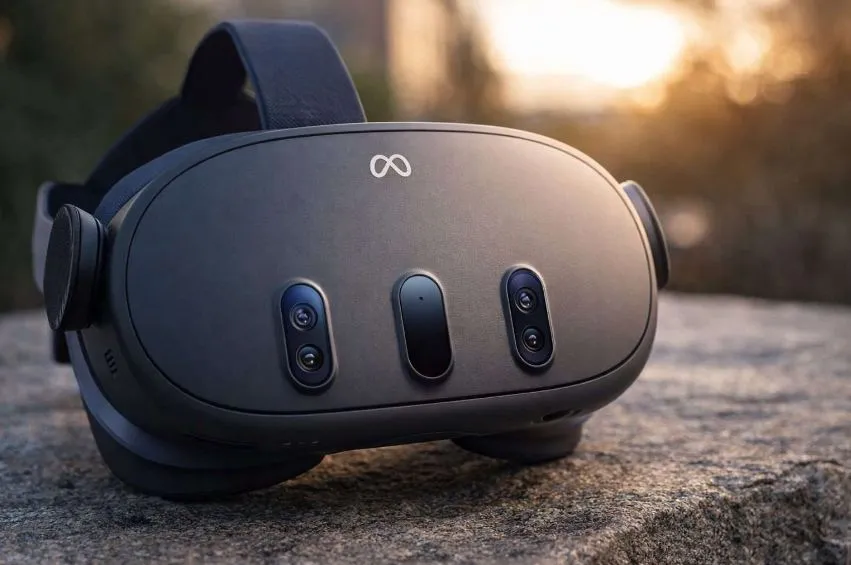
Meta has launched an experimental feature for the Quest 3 headset that transforms any flat surface into a functional keyboard and touchpad. This technology, which Mark Zuckerberg teased years ago claiming typing speeds of 100 words per minute, is now available to early testers through the v85 Public Test Channel update in February 2026.
How It Works
The system uses the Quest 3’s advanced hand tracking and depth-sensing cameras to “anchor” a virtual keyboard layout to the real world. When you place your hands flat on a table or desk for a few seconds, the headset scans the surface and generates a QWERTY keyboard with a laptop-style touchpad right under your fingers.
The keyboard is surprisingly accurate according to early testers because it eliminates the “gorilla arm” fatigue common in VR typing. Instead of typing in mid-air, users rest their hands on the surface, which provides “ambient haptics”—the physical sensation of tapping keys simulates the feel of a real keyboard. The touchpad, located below the keys, supports standard gestures like cursor movement, tapping to click, and two-finger scrolling.
Why This Matters
Productivity in VR: This feature addresses one of the biggest limitations of VR headsets—the inability to type efficiently. With a virtual keyboard, users can browse casually, send quick emails, and message without removing the headset or fumbling with controllers. This brings VR closer to being a viable workspace alternative.
No Additional Hardware: Unlike previous solutions that required physical Bluetooth keyboards, this feature works on any flat surface. It’s accessible, convenient, and doesn’t require carrying extra equipment.
Accessibility and Innovation: By using hand tracking and depth sensing, Meta demonstrates how existing hardware can be leveraged creatively. This opens doors for future productivity features that could make VR headsets more practical for everyday computing tasks.
Current Limitations
The technology isn’t perfect yet. The touchpad is reportedly less reliable than the keyboard, registering correctly only 40-60% of the time for some testers. Extended typing sessions can be tiring or even painful for fingers due to the lack of physical haptic feedback. Additionally, the feature is currently exclusive to Quest 3 and unavailable on Quest 3S due to hardware differences.
Overall, this experimental feature represents a significant step toward making VR headsets more functional for work and communication, potentially expanding their use beyond gaming and entertainment.