Li Auto’s Livis AI Smart Glasses are a new wearable device designed to work closely with the company’s vehicles while also serving as everyday smart eyewear. Priced at 1,999 yuan (about $283 USD), the glasses were introduced on December 3, 2025. Their main purpose is to extend the in-car intelligent experience outside the vehicle, letting users interact with the car and digital features more naturally through sight and voice.
A key highlight of the Livis glasses is their deep integration with Li Auto cars. When paired with supported models, they can project AR navigation directly into a user’s line of sight, making directions easier to follow without looking at a screen. Users can give voice commands to adjust features like the air conditioning or open the tailgate, which adds convenience while driving. The glasses also help improve safety by monitoring the driver’s eyes for signs of fatigue. To boost performance, the device can hand off heavy computing tasks to the car’s onboard hardware, including powerful chips found in models like the Li L6 Max. A fast wireless connection through 5G or Wi-Fi 6E ensures smooth communication with the vehicle. A teaser video even showed the glasses being used to unlock a car door, hinting at future interactive features.
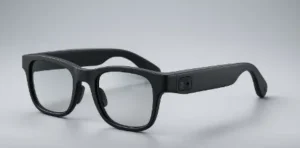
Aside from car-related functions, the glasses come with a built-in AI assistant called Lixiang Tongxue, based on Li Auto’s UBOS platform and powered by Mind GPT. This assistant can answer questions, provide reminders, and support daily tasks. Every version of the glasses includes ZEISS lenses, with choices for prescription use, sunglasses, or lenses that adjust to light automatically. They also feature a 12-megapixel wide-angle camera with stabilization and Live Photo support for capturing moments. The lightweight frame—starting at just 36 grams—is comfortable to wear and protected against dust and water with an IP54 rating.
Li Auto sees the Livis glasses as part of a growing AI ecosystem that stretches beyond cars. Described as a “wearable robot,” they aim to bring smart features into everyday life. The company may also introduce other AI devices, such as a smart speaker, to build a more complete technology ecosystem.