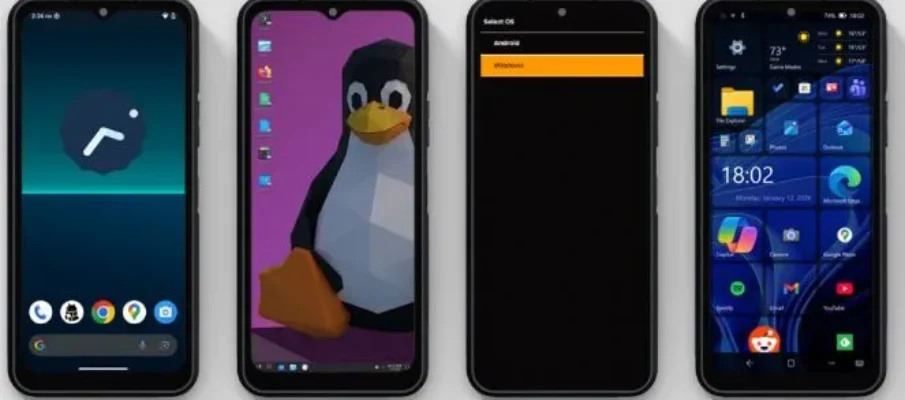
The NexPhone, manufactured by NexDeck, is a versatile smartphone designed to function as a desktop replacement. Launching globally in Q3 2026, it is unique for its ability to run three distinct operating systems: Android 16, Linux (Debian), and an ARM-based version of Windows 11.
Technical Capabilities
The device uses a custom NexOS interface and a multi-boot loader that allows users to select their preferred operating system at startup. While Linux runs natively for better performance, Windows 11 operates through a virtualization layer. The hardware includes a Qualcomm Dragonwing chipset, 12 GB of RAM, and a 5,000 mAh battery. Security is managed through secure boot protocols and encrypted partitions for each OS, with biometric authentication shared across all environments.
Desktop Integration
The NexPhone excels as a “three-in-one” device by connecting to external keyboards, monitors, and mice via USB-C. It is specifically designed to work with NexDock lapdock accessories, which instantly transform the phone into a laptop. A unified file manager ensures that files remain accessible across Android, Linux, and Windows partitions.
Market Position and Use Cases
Priced at approximately $549, the NexPhone is positioned as an affordable alternative to flagship smartphones. It is primarily targeted at:
- Developers: To code in Linux and test in Android.
- Professionals: Who require cross-platform tools for IT or consulting work.
- Students and Travelers: Who want to carry a single device that serves as a phone and a PC.
While it offers a competitive edge over “desktop-like” shells such as Samsung DeX, the NexPhone faces challenges regarding battery drain and the need to optimize software across three different ecosystems.