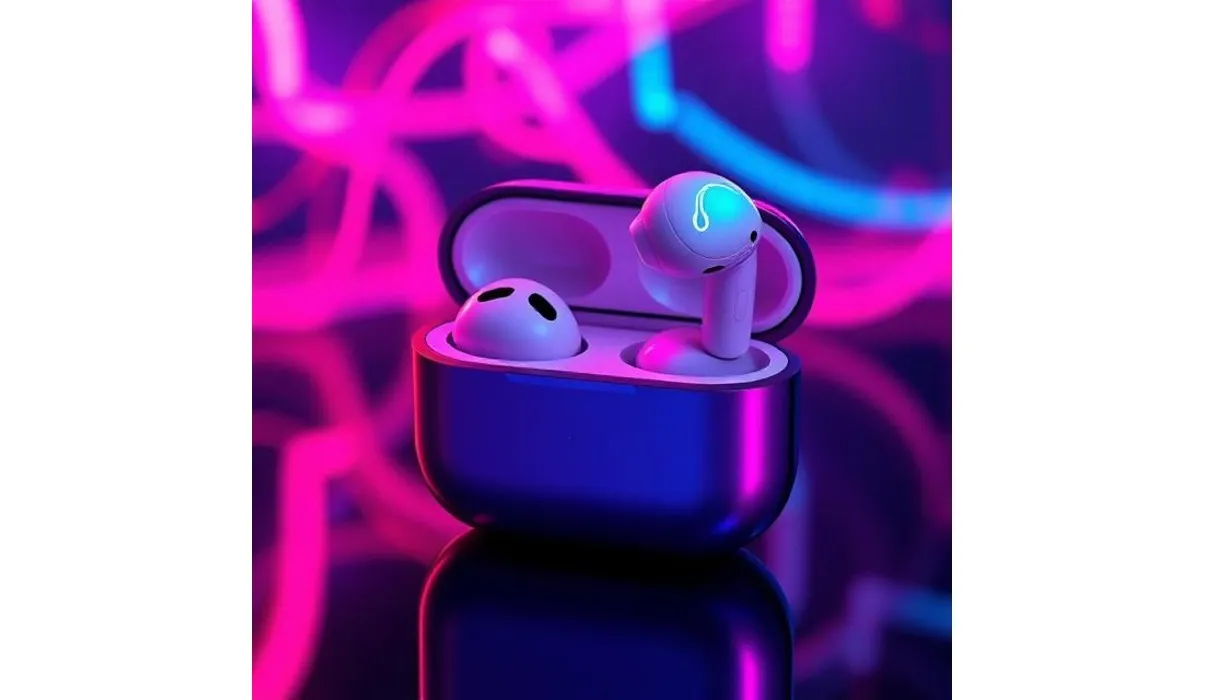
1. Industry-Leading ANC for the Price
The biggest reason to consider the Enco Air 5 Pro is its 55 dB hybrid ANC — a meaningful jump from the 49 dB on the previous Enco Air 4 Pro. For a mid-range pair of earbuds, that number is hard to ignore. The noise cancellation works across a frequency range up to 5,000 Hz, which means it handles not just low rumbles like traffic or AC hum, but also mid-range noise like office chatter. You get four modes to choose from: ANC on, Adaptive ANC (which adjusts automatically based on your environment), Transparency Mode, and ANC off. Adaptive mode works well if you don’t want to keep manually switching, and Transparency Mode is clear enough for brief conversations without pulling out the earbuds.
2. Battery Life That Actually Lasts
This is the other headline feature. With ANC turned off, the earbuds alone offer around 13 hours of playback. Add the 530 mAh charging case, and total runtime climbs to 54 hours — a genuinely impressive figure at this price. Even with ANC running, you get about 7 hours per charge and roughly 29 hours total. If you forget to charge them overnight, a 10-minute quick charge gives back around 4 hours of use. Most people won’t push this to its limit in a single week.
3. Audio Quality Worth Paying For
The 12 mm dynamic drivers are tuned for a punchy low end and a wider soundstage. The titanium-plated diaphragm helps with detail at higher frequencies, and the frequency range of 20 Hz to 40 kHz covers everything from deep bass to Hi-Res content. More importantly, the earbuds support LHDC 5.0 with wireless transmission up to 1 Mbps — noticeably better than standard SBC or AAC when paired with a compatible Android phone. Compression artifacts are reduced, and complex tracks feel more alive. iPhones and older Android devices fall back to AAC, which still sounds decent, just not at the same level.
4. Build, Comfort, and Durability
Each earbud weighs about 4.4 g, making them one of the lighter options in the under-Rs.10,000 segment. The fit is semi-open and ergonomic enough for long sessions without the uncomfortable pressure some in-ear designs cause. The charging case is compact at roughly 63×50×25 mm, and the magnetic lid keeps it securely closed in a pocket or bag. Both earbuds carry an IP55 rating, so sweat, gym use, and light rain are not a concern.
5. Connectivity and Low Latency
Bluetooth 6.0 with dual-device pairing means you can stay connected to your phone and laptop at the same time without the hassle of re-pairing when switching. The low-latency mode brings audio lag down to around 47 ms — not quite zero, but good enough that gaming and video watching stay in sync. Android users get the most out of LHDC 5.0; iOS users are limited to AAC, though BT 6.0 still makes switching between devices smooth.
6. Call Quality and AI Features
Each earbud has a triple-microphone setup with AI-powered noise reduction during calls. Background sounds are suppressed well, and there’s a dedicated wind-noise algorithm that keeps calls clear in outdoor winds up to about 25 km/h. There’s also an AI translation feature on compatible devices — useful for quick conversations in another language, though language support depends on your firmware and region.
7. Controls and App Features
Touch controls handle the basics: play, pause, track skip, call management, and ANC switching. A slide-based volume control on the earbud stem lets you adjust volume with a swipe rather than reaching for your phone. The companion app unlocks 3D spatial audio effects, which adds some depth for movies and gaming without feeling gimmicky.
Quick Verdict
Buy it if: You want strong ANC, long battery, and Hi-Res audio without paying flagship prices.
Skip it if: You’re on iOS and want the most from the codec, or if you need over-ear comfort for extended wear.
Rating: 8.5/10 — The OPPO Enco Air 5 Pro punches above its weight on every spec that matters. The 55 dB ANC, 54-hour battery, and LHDC 5.0 support are genuinely difficult to match at this price point. There’s very little to complain about unless you’re deep in the Apple ecosystem.