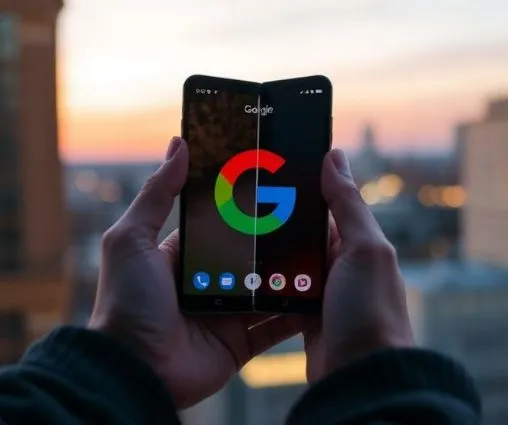
Google’s Pixel 11 lineup arrives as one of the most AI-driven smartphone families the company has ever built. Rather than competing on paper specs, Google has taken a calculated approach — fewer raw resources, smarter software, and tighter hardware integration. Here’s a priority-ranked breakdown of everything that matters.
- The Tensor G6 Chip Is the Core Story
Everything in the Pixel 11 series revolves around Google’s new Tensor G6 processor, built on an approximately 2-nanometer fabrication process. Its seven-core CPU follows a 1+4+2 arrangement — one powerhouse “Ultra” core handles demanding tasks, four balanced cores manage everyday workloads, and two efficiency cores take care of background activity. This structure is more thoughtfully divided than the older 1+5+2 design, leading to better heat control and longer sustained performance. More importantly, the chip is purpose-built for artificial intelligence tasks rather than chasing gaming or benchmark scores.
- Less RAM, But Smarter Memory Use
The base Pixel 11 ships with 12 GB of RAM, while the Pro model offers either 12 GB or 16 GB. On the surface, this trails several rival flagships that push 24 GB or more. However, Google is leaning on Tensor G6’s AI engine to handle memory management intelligently — predicting which apps you’ll open next, clearing background tasks efficiently, and using storage-based swap mechanisms. For most users, day-to-day performance will feel smooth, though heavy multitaskers and gamers may feel constrained.
- Camera Upgrades Across the Entire Lineup
Both the standard Pixel 11 and the Fold variant receive a fresh 50-megapixel primary sensor, replacing the older 48-megapixel setup. Pixel-binning technology combines multiple pixels into one, producing sharper, brighter images — especially in low-light conditions. The Pro model takes this further with a larger or more advanced main sensor, a refined ultra-wide lens with reduced edge distortion, and a stronger telephoto module capable of 3× to 5× optical zoom with improved stabilization. On-device AI handles real-time HDR stacking, noise reduction, portrait depth, and subject tracking without needing cloud processing.
- Pixel 11 Pro Gets a Noticeably Better Display
While both models share similar physical dimensions, the Pro variant’s screen resolution climbs to around 1280×2856 pixels, delivering sharper text and finer visual detail. The panel supports adaptive refresh between 1 Hz and 120 Hz — slowing to near-stillness for static content to preserve battery, and snapping up to full speed during scrolling or gaming. Sustained brightness reaches approximately 2,450 nits, making outdoor visibility strong and HDR video genuinely impressive.
- Security Gets a Meaningful Upgrade
The Titan M3 security chip works alongside Tensor G6 to keep sensitive information locked down at the hardware level. Biometric data, passwords, payment credentials, and device encryption keys are all stored in a protected environment isolated from the main operating system. Even if the phone is compromised or stolen, this layer of protection holds. It also enables many AI features — like on-device voice processing and document scanning — to function entirely without sending data to external servers.
- Connectivity and Graphics Are Solid, Not Outstanding
The MediaTek M90 modem bundled with Tensor G6 handles 5G across global frequency bands, improving signal stability and reducing power draw during prolonged cellular use. The PowerVR CXTP-48-1536 GPU manages the graphics workload. It’s competent for everyday use, smooth UI rendering, and casual gaming, but it uses older architecture that won’t satisfy serious mobile gamers seeking top-tier performance.
Final Verdict
The Pixel 11 series makes the most sense for people who value photography, privacy, and Google’s software ecosystem over headline specifications. Google’s bet is straightforward: intelligent design outperforms raw hardware. If your priorities are outstanding camera results, clean Android, strong privacy controls, and seamless AI assistance, this lineup delivers. If you need maximum RAM for heavy multitasking, cutting-edge gaming graphics, or flagship-tier GPU benchmarks, rival options may serve you better. The Pixel 11 isn’t trying to win every category — it’s trying to win yours.