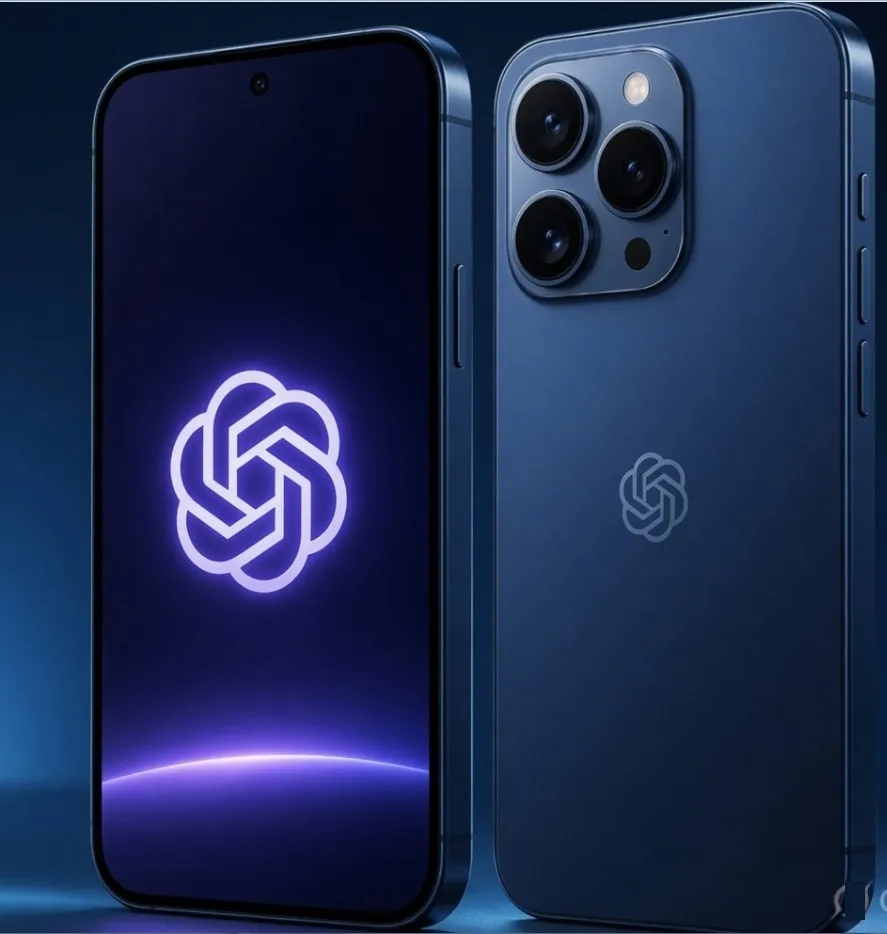
The AI race has moved beyond software. OpenAI is now building its own smartphone — and the ambition behind it goes far deeper than just releasing another device. Here is a clear breakdown of everything that matters, ranked from most to least important.
- This Is Not Just a Phone — It’s a Strategic Shift
OpenAI’s core goal is to stop being just an AI model company and become a full-stack technology platform. Right now, ChatGPT lives inside other companies’ devices. That means OpenAI depends on Apple, Google, and Samsung to reach users. A dedicated phone changes that entirely. By owning the hardware, operating system, and AI services together, OpenAI can deliver a tightly connected experience that no third-party device can replicate. Think of it as OpenAI building its own Apple — chip, software, and services all under one roof.
- The Phone Is Designed Around an AI Agent, Not Apps
Forget the familiar grid of app icons. OpenAI wants to replace that model with a single persistent AI agent that handles everything — booking, reminders, messaging, search, and more — through conversation. Instead of opening separate apps, users would interact with one intelligent assistant that understands their habits, preferences, and daily routines. This is not an AI feature added on top of a regular phone. The agent would be the phone’s primary interface from the ground up.
- Key Partners Are Already in Place
OpenAI is not building this alone. MediaTek and Qualcomm are both involved in developing the processor, giving OpenAI flexible options across different price points and performance tiers. Luxshare Precision — the same contract manufacturer used by Apple — has been brought on for system design and large-scale production. Having an Apple-tier manufacturing partner from the beginning is a significant advantage for a company entering hardware for the first time.
- The Timeline Is 2028, Not Sooner
Some reports have suggested a 2027 release, but that appears to be an oversimplification. Technical specifications and supplier agreements are expected to be finalized by late 2026 or early 2027. Mass production is realistically targeted for 2028. This is still a multi-year project in its early stages — important context for anyone following the story closely.
- AI Processing Will Be Split Between Device and Cloud
The phone will handle lighter tasks — voice recognition, quick suggestions, basic context awareness — directly on the device. Heavier reasoning and complex requests will be processed through the cloud. This hybrid approach keeps the experience fast and functional even without a perfect internet connection, while still tapping into powerful remote models when needed.
- The Business Model Goes Beyond Hardware Sales
Selling phones is only part of the plan. OpenAI sees the device as a platform for tiered subscription services — think Pro and Enterprise plans tied directly to the phone. There is also the possibility of an “agent marketplace,” where third-party services plug into OpenAI’s ecosystem instead of building traditional apps. This would generate recurring revenue and reduce dependence on Apple’s App Store or Google Play.
- The Risks Are Real and Significant
The smartphone market is brutal. Apple and Samsung dominate the premium segment, Chinese manufacturers dominate on price, and margins are thin across the board. OpenAI is already running at a significant financial loss. If the phone underperforms or adoption is slow, it could pull resources away from core AI research and model development. There is also a regulatory dimension — always-on sensors and continuous data collection will attract close scrutiny in the EU, India, and other markets with strict privacy laws.
- The Bigger Picture: A New Computing Paradigm
If OpenAI’s phone gains real traction, it would not just compete with existing devices — it could change how mobile computing works entirely. An agent-first interface challenges the app-store model that has defined smartphones for nearly two decades. That would force Apple and Google to rethink their own strategies and accelerate their AI development timelines.
OpenAI’s smartphone is a high-stakes, long-term bet. The payoff, if it works, is enormous. The risk, if it stumbles, is equally large. For now, it is the most ambitious hardware move any AI company has attempted.