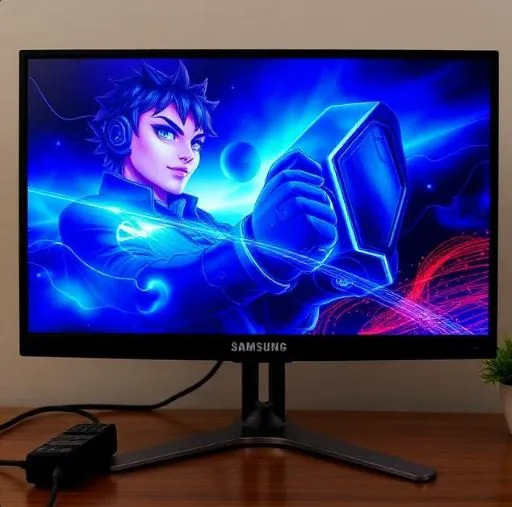
- The Headline Feature: World’s First 6K Gaming Display
Samsung has done something genuinely new here. The Odyssey G8 packs a native 6,144 × 3,456 resolution onto a 32-inch curved Fast IPS panel — that’s 1.75 times the total pixels of a 4K screen. At 224 pixels per inch, everything from in-game textures to desktop text looks razor-sharp. No other gaming monitor on the market currently offers this resolution, which makes the G80HS a legitimate first in the industry.
- Dual-Mode: One Monitor, Two Personalities
The smartest thing about this display is its ability to switch personalities. In 6K/165Hz mode, you get maximum visual fidelity — perfect for open-world titles like Cyberpunk 2077 or Microsoft Flight Simulator. Flip to 3K/330Hz mode and the resolution drops to 3,072 × 1,728, but frame rates nearly double, making it ideal for fast-paced competitive games like Valorant or CS2.
Switching between the two happens directly from the monitor’s OSD menu — no GPU driver adjustments needed. For anyone who plays both AAA story games and competitive shooters, this eliminates the need to own two separate monitors.
- GPU Requirements: Be Realistic Before Buying
This is the most critical purchase consideration. To run 6K at 165Hz, you realistically need an RTX 4080, RTX 4090, or AMD RX 7900 XTX. Mid-range cards like the RTX 4070 will struggle in demanding games at full resolution. However, those same cards can comfortably hit high frame rates in the 3K/330Hz mode, especially in lighter esports titles. If your GPU isn’t top-tier, the 3K mode is where you’ll spend most of your time — and that’s still a great experience.
- Image Quality and Color
The Fast IPS panel delivers 178-degree viewing angles, up to 1 billion colors (10-bit equivalent), and solid sRGB/DCI-P3 coverage. It supports both HDR10 and HDR10+ Gaming, with dynamic tone-mapping that adjusts brightness and contrast per scene without adding noticeable input lag. Peak brightness sits at 350 nits — adequate for HDR gaming but not in the same league as mini-LED panels.
The one trade-off: the contrast ratio is around 1,000:1, which is standard for IPS. Blacks won’t look as deep as on an OLED screen, and the glossy finish means reflections can be a problem in brightly lit rooms.
- Gaming Tools Worth Knowing About
Beyond raw specs, the G80HS includes several practical software features. Black Equalizer brightens shadowy areas without washing out the whole image — genuinely useful in dark horror or stealth games. Virtual Aim Point overlays a custom crosshair when a game lacks one. The Super Arena Gaming UX puts refresh rate switching, HDR toggles, and sync options within quick reach from the OSD, so you’re not digging through menus mid-session.
- Connectivity and Build
For ports, the monitor includes DisplayPort 2.1 (UHBR-80) — essential for driving 6K at full speed — plus multiple HDMI 2.1 inputs for consoles or a second PC. An integrated USB hub keeps peripheral clutter off the desk. The stand supports tilt and sideways rotation, and a standard 100×100mm VESA mount is available for monitor arms. One notable absence: no built-in speakers or webcam, so plan for external audio.
- Pricing, Availability, and Who Should Buy
Currently available in Europe starting at €1,499 (~$1,319), with broader global availability expected later in 2026. India pricing hasn’t been confirmed yet.
Buy it if you own a flagship GPU, play both cinematic and competitive games, and want a single premium display for everything including content creation.
Skip it if your GPU is mid-range or you primarily play fast-paced esports titles — a 1440p high-refresh monitor will serve you better at a fraction of the cost.
Wait if you’re in India or a region outside Europe, since availability and local pricing are still pending.