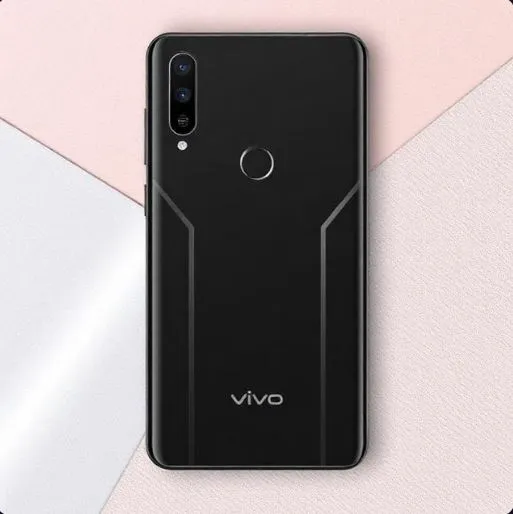
Imagine you’re a travel vlogger packing for a two-week trip. You’re staring at your bag — mirrorless camera, extra lenses, power bank, mic — and thinking, there has to be a better way. That’s exactly the gap Vivo is trying to fill with the X300 Ultra, and honestly, after going through everything this phone brings to the table, it makes a surprisingly strong case.
Let’s start with the camera, because that’s the whole point.
The main shooter is a 200MP Sony sensor — the LYT-901 — and it’s not just big on paper. In practice, it’s smart. It reads the scene and decides whether you need a 12.5MP smooth low-light shot or a full 200MP resolution grab for heavy cropping later. You don’t have to think about it; the phone does. Zeiss optics and coating keep flare and reflections in check, and the dynamic range is genuinely improved thanks to DCG HDR processing.
But here’s where it gets interesting for creators: the telephoto system. Vivo calls it “Cannon 400,” and the idea is that the 85mm periscope is just the starting point. Snap on the detachable Zeiss 200mm tele-extender — which clicks on magnetically and auto-configures the camera app — and you’re suddenly shooting at near-400mm equivalent. Wildlife, sports, distant landscapes — that’s territory usually reserved for dedicated camera kits.
Video is where this phone really leans into its identity.
Vivo isn’t just saying “good video phone.” They’re going after the cinema-creator crowd. You get log-style recording, ACES-compatible color workflows, 4K/120fps on the main sensor, and even 8K/30fps for short bursts. There’s a quad-mic array with scene presets — interview mode, vlog mode, ambient — so your audio keeps up with your visuals. The stabilization stacks optical, EIS, and depth-map data together, which means handheld walking shots don’t look like you recorded them during an earthquake.
Now let’s talk about the battery, because creators live and die by it.
The 7,000mAh silicon-carbon cell isn’t just massive — it’s engineered for endurance under load. Some real-world tests suggest you can push through four to five hours of continuous 4K recording before the needle moves significantly. When you do need to charge, 100W wired gets you from zero to fifty percent in under twenty minutes. You can even charge while shooting 4K without the phone cooking itself, thanks to smart throttling and the vapor-chamber cooling underneath.
Under the hood, it’s all Snapdragon 8 Elite Gen 5, which is exactly what you’d expect at this price point. Benchmark scores are up there with anything launching in 2026, and thermal management keeps performance steady during long gaming or recording sessions rather than throttling aggressively after a few minutes.
The software tells its own story.
OriginOS 6 has been built around the “creator first” idea. There are dedicated Creator Workspaces where you save platform-specific presets — YouTube aspect ratios, Instagram safe zones, TikTok export settings — all in one place. A “Creator Focus Mode” kills notifications and locks brightness so nothing interrupts a long take. The gallery app has basic timeline editing, auto-highlight detection, and quick-export to social platforms without needing a third-party app.
Who should actually buy this?
If you’re a travel vlogger, semi-pro photographer, or content creator who’s tired of lugging multiple devices, the X300 Ultra was designed with your exact frustration in mind. The modular lens system, the cinema-grade video tools, the week-long battery endurance, the on-device AI that handles the tedious stuff — it all points in one direction.
The tradeoffs are real: it’ll weigh somewhere around 245g, it’s thick enough to notice, and the price in India is expected to land firmly in the Rs.80,000–Rs.1,10,000 range depending on storage. It’s not for everyone.
But if your phone is your camera? This one’s worth taking seriously.