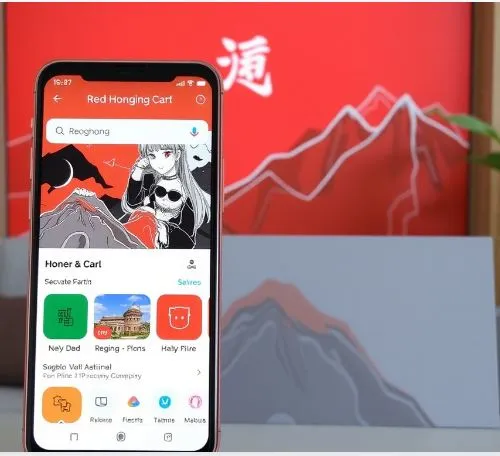
Think of RedNote as a lifestyle universe in your pocket. You scroll through short videos, discover product recommendations, read mini-blog posts, and shop — all without ever leaving the app. The home feed learns what you love fast, mixing content from creators you follow with algorithmic picks from the Explore tab.
Creating content is straightforward. Hit the big plus button at the bottom center, choose whether you want to post photos, a video, or just text, and the editing suite handles the rest — filters, stickers, auto-cut tools, the works. For video, keep it under 60 seconds for standard posts, though the web version allows uploads up to 2GB. Images work best in a 3:4 vertical ratio (1080×1440 pixels) if you want your posts to look polished.
Discovery is where RedNote genuinely shines. You can search by keyword, hashtag, or even drop an image to find similar content. There’s also a Nearby tab that surfaces local recommendations — handy if you’re hunting for a café or a weekend event, though it does ask for location permissions upfront.
Who Can Actually Use It?
On the hardware side, RedNote isn’t demanding. Android 7.0 and up works fine, and you’ll want at least 2GB of RAM for smooth video playback. iPhone users need iOS 12 or later — basically an iPhone 7 onward. If you prefer a desktop experience, the web version (Chrome works best) lets you browse and post, but video editing stays mobile-only.
Making Money on RedNote
For creators, RedNote offers a few legitimate paths to income. Brand deals are the biggest one — companies pay creators (called KOLs, or Key Opinion Leaders) based on follower count and content quality. Live-streaming is another strong earner: you can take 20–50% commissions on products sold during a stream, collect virtual gifts from viewers, and even land promoted broadcast slots. If you have specialized knowledge, paid subscriptions and consulting arrangements are also on the table.
The platform itself runs on advertising — somewhere between 60–80% of its revenue comes from native ads woven into the feed and search results. E-commerce transactions bring in another slice, with RedNote taking 5–20% per sale, plus fees for premium storefronts.
The India Situation: Here’s the Real Talk
Here’s where things get complicated. If you’re in India and you’ve been searching for RedNote on the Play Store or App Store lately, you’ve come up empty — and that’s not a glitch. As of early 2026, the app has quietly vanished from both stores in India.
This wasn’t entirely unexpected. Indian authorities had been watching RedNote closely since mid-2025, after reports emerged that users in Northeast India were allegedly being incentivized to post anti-India content. That set off alarm bells, and ban procedures started moving in May 2025. By January 2026, users began noticing the app was gone. No dramatic announcement — just a silent removal, consistent with how India handled previous Chinese app bans.
This fits a well-established pattern. India banned TikTok in 2020, along with hundreds of other Chinese apps, citing national security concerns. RedNote’s fate mirrors that playbook almost exactly. Taiwan also banned it in December 2025 for fraud and cybersecurity issues, so India isn’t alone in its caution.
Some users are turning to APKs — third-party installation files downloaded outside official stores. But this comes with real risk: no official security updates, no warranty of what’s actually in those files, and a grey-area legal status. If you care about device security, the unofficial route is a gamble not worth taking.
If you’re outside India, RedNote is a genuinely well-built platform. Its algorithm rewards real content over promotional fluff, the commerce integration is seamless, and for creators, the monetization tools are mature. It’s worth exploring if lifestyle content, social commerce, or short-form video creation is your thing.
If you’re in India, the official door is currently closed. Keep an eye on whether the situation changes — but for now, looking toward alternatives that are actually available and supported in your region is the smarter move.